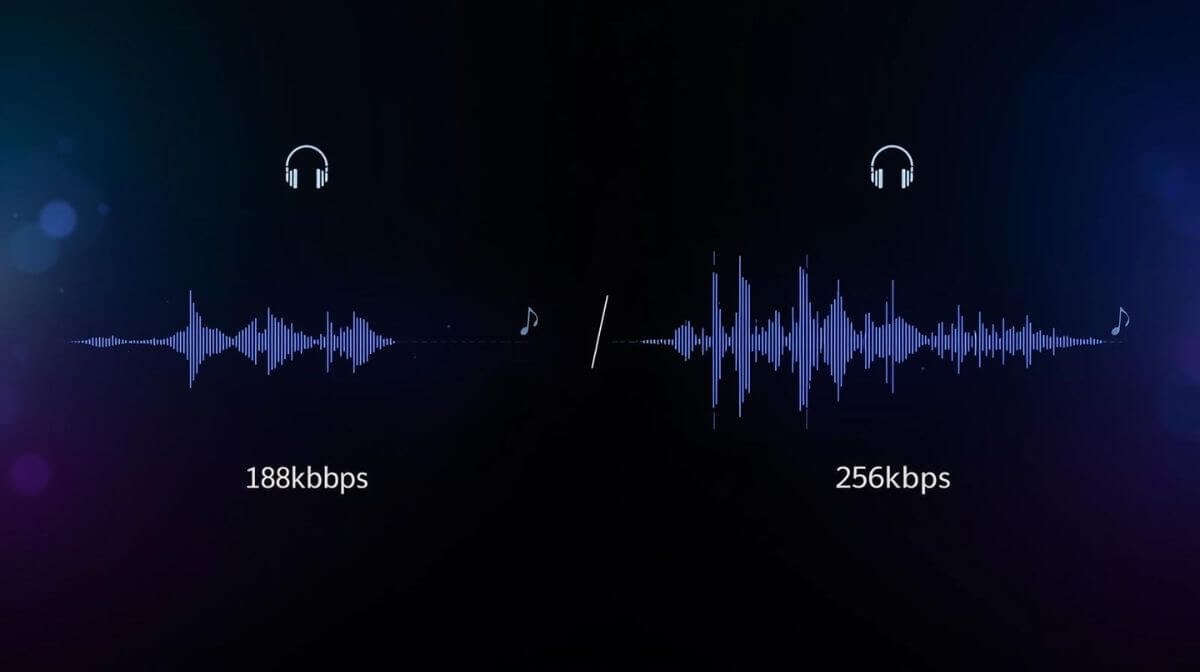
When choosing between 128kbps vs 256kbps MP3, many people wonder which audio quality is actually better. The short answer is simple: 256kbps offers clearer sound, stronger bass, and fewer compression losses compared to 128kbps. For casual listeners or those with limited storage space, 128kbps can still be a good option, but for true music enthusiasts, 256kbps provides a noticeably richer listening experience across headphones, speakers, and car audio systems.
What Does kbps Mean in Audio?
The rate of sound of an audio file is measured in kilobits per second, or kbps. The amount of audio data processed per second is determined by bitrate. More data at a higher bitrate translates into better sound quality.
Audio compression is used by MP3 (MPEG-1 Audio Layer III) to minimize file size. More audio details are eliminated to reduce the size of the file when the bitrate is lower.
Understanding bitrate is essential when comparing 128kbps vs 256kbps MP3 quality differences.
Understanding 128kbps MP3
128 kilobits of data per second are used by the compressed audio format known as 128kbps MP3.
Features of 128kbps
- smaller file size (about 3MB for a song that lasts 3–4 minutes)
- quicker download
- Reduced storage usage
- Simple audio quality
- In the early days of the internet, when storage and speed were
nderstanding 256kbps MP3
256kbps MP3 uses 256 kilobits of data per second, which means it keeps more audio information during compression.
Features of 256kbps
- Larger file size (~6–7MB for a 3–4 minute song)
- Clearer vocals
- Better bass depth
- Fewer compression artifacts
Most modern streaming platforms like Spotify and Apple Music use bitrates around 256kbps for high-quality streaming.
128kbps vs 256kbps – Key Differences
The comparison below clearly explains the real differences between 128kbps vs 256kbps MP3 in terms of file size, sound clarity, and how to remove reverb for cleaner audio.
| Feature | 128kbps | 256kbps |
| File Size (3–4 min song) | ~3MB | ~6–7MB |
| Sound Quality | Basic | Clear & Detailed |
| Bass | Moderate | Strong & Rich |
| Compression Loss | Higher | Lower |
| Best For | Casual listening | Music lovers |
Why Bitrate Matters for Audio Quality
Bitrate determines how much audio data is processed every second. Higher bitrate like 256kbps preserves more of the original recording’s details, making vocals clearer and instruments more distinct. Lower bitrate like 128kbps removes some audio data to save space, which can slightly reduce bass depth and high-frequency clarity.
Can You Hear the Difference Between 128kbps vs 256kbps MP3?
Yes, particularly if you use high-quality headphones or car speakers.
128 kbps:
- High frequencies can have a somewhat flat sound.
- Instruments in the background might seem less intricate.
256 kbps:
- The vocals sound more distinct.
- The instruments are more dispersed.
- The bass has more body.
The difference may not be very noticeable on low-cost mobile speakers. However, the difference is more noticeable when using high-quality headphones.
Is 256kbps Close to CD Quality?
CD quality audio is approximately 1411 kbps, significantly faster than both 128 kbps and 256 kbps.
However, most listeners find 256 kbps to be “near-transparent,” which means that under typical listening circumstances, many people find it difficult to tell it apart from CD quality.
Which One Should You Choose?
Choose 128kbps if:
- You have limited storage.
- You listen casually.
- You download many songs and want smaller files.
Choose 256kbps if:
- You care about sound clarity.
- You use headphones or speakers.
- You want better music experience.
- For most users in 2026, 256kbps is the recommended balance between quality and file size.
Does Higher Bitrate Always Mean Better Audio?
Generally yes,higher bitrate means better sound quality. However, the original recording quality also matters.
If the source audio is low quality, increasing bitrate will not magically improve it.
Conclusion
When comparing 128kbps vs 256kbps MP3, another factor to consider is the listening device. On high-quality headphones or speakers, 256kbps provides noticeable clarity and depth, while 128kbps may sound slightly flat. Additionally, streaming platforms often compress audio further, making 256kbps a safer choice for maintaining quality.